

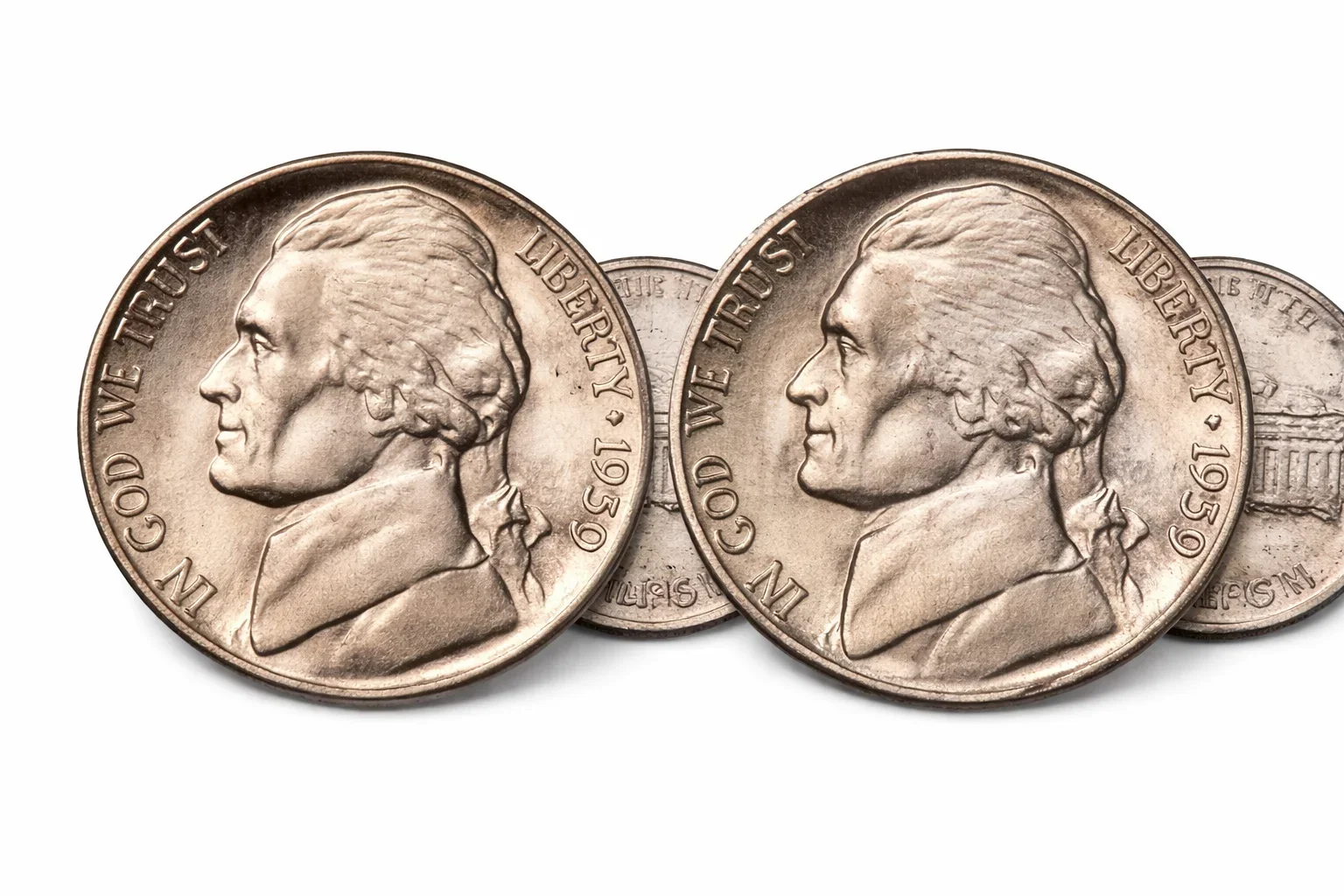
A Jefferson nickel value chart only makes sense when the reader knows which dates deserve attention first. This series is long. Most dates are ordinary. A smaller group gets checked again and again because of low mintage, better collector demand, wartime silver, or the Full Steps designation. That is where the chart starts to become useful.
Why This Series Needs More Than a Price List
Jefferson nickels began in 1938 and now cover several very different collecting zones. Early dates matter for classic set building. Wartime nickels matter because they use a different alloy and form a popular short set. Some later dates matter because of low modern mintages. Full Steps matters because it can change the value logic more than the date itself. A flat chart does not explain that well. A better overview does.
| Group | Why Collectors Check It First |
| Early dates | Classic set pressure |
| Key dates | Strong demand |
| Wartime nickels | Silver alloy |
| 2009 nickels | Low modern mintage |
| Full steps coins | Strike-based premium |
Start With the Early Dates
Most collectors begin the series by checking the early run. That is where the first low-mintage dates appear, and it is where the set starts to feel serious. The dates most often pulled forward are 1938-D, 1938-S, 1939-D, 1939-S, and 1950-D. These are not all rare in an absolute sense, but they are the dates that keep showing up when collectors sort the Jefferson chart into “ordinary” and “worth a closer look.”
This matters because a Jefferson nickel chart is not only about the highest price. It is also about the dates that shape the series. Early better dates are the foundation of that structure. A collector who understands the front end of the series already understands a large part of the market logic.
The Two Dates That Always Get Mentioned
The two dates that almost always come up first are 1939-D and 1950-D. They are the classic keys of the series. They are not important only because people repeat the same names. They matter because the market has treated them as key targets for a long time, and that status still shapes buying behavior.
| Date | Why It Stands Out |
| 1939-D | Classic early key date |
| 1950-D | Best-known later key date |
These two coins give the series its first real checkpoints. If someone says they are checking a Jefferson chart seriously, these are usually among the first lines they read.
Why 1942-D Gets Pulled Forward
1942-D is one of the dates that beginners often miss. It does not always get the same attention as 1939-D or 1950-D, but experienced collectors know it belongs near the front of the conversation. It stands out in the circulation-strike run and gets checked early for that reason.
This is a good example of why the series cannot be reduced to one simple rule. Some dates matter because they are famous keys. Some matter because they are tougher than they look in the grades collectors want. 1942-D sits in that second group.
The Wartime Silver Nickels Need Their Own Place
The wartime nickels are a separate lane inside the Jefferson series. They run from late 1942 through 1945, use a 35% silver alloy, and carry the large mintmark above Monticello. They also form an 11-coin short set, which gives them a clear collecting identity of their own.
That is why many collectors check them as a group before they dig into the full run. The attraction is simple:
- Different alloy
- Clear date range
- Large mintmark placement
- Short-set appeal
This is one of the easiest parts of the series to isolate and understand. It is also one of the most practical. A collector can learn a lot about Jefferson nickels just by sorting the wartime group correctly.
Full Steps Changes the Whole Chart
This is the point many new collectors miss. Some Jefferson nickels become important not because the date is rare, but because the coin shows Full Steps. For business strikes, the designation depends on the steps of Monticello being sharply defined and uninterrupted. When that happens, the coin can move into a very different value bracket.
This changes how the chart should be read. A date that is common without Full Steps may become a real target with Full Steps. That is why some collectors check the reverse before they even think about the usual price line. In this series, strike quality often has more power than people expect.
Some 1939 Coins Need Extra Attention
The year 1939 is more complicated than a quick chart suggests. The San Francisco issue is separated into Reverse of 1938 and Reverse of 1940 types, and the market treats them differently. NGC certifies 1939-S nickels by reverse type, and both NGC and PCGS show that the reverse subtype can matter, especially once Full Steps enters the picture.
This is exactly the kind of detail that separates a practical chart from a shallow one. A collector who only sees “1939-S” as one flat entry is missing part of the real structure of the series.
The Modern Dates Collectors Check First
The Jefferson series does not stop being interesting after the classic dates. Among modern issues, 2009-P and 2009-D stand out because of their unusually low mintages. They are not key dates in the old-fashioned sense, but they are the modern dates that collectors check first because they are much less common in circulation than most recent nickels.
That makes them important in a practical chart. They remind the reader that a Jefferson nickel guide should not end in the 1950s. The series still has later dates that deserve a quick first check.
Not Every Important Date Belongs in the Same Tier
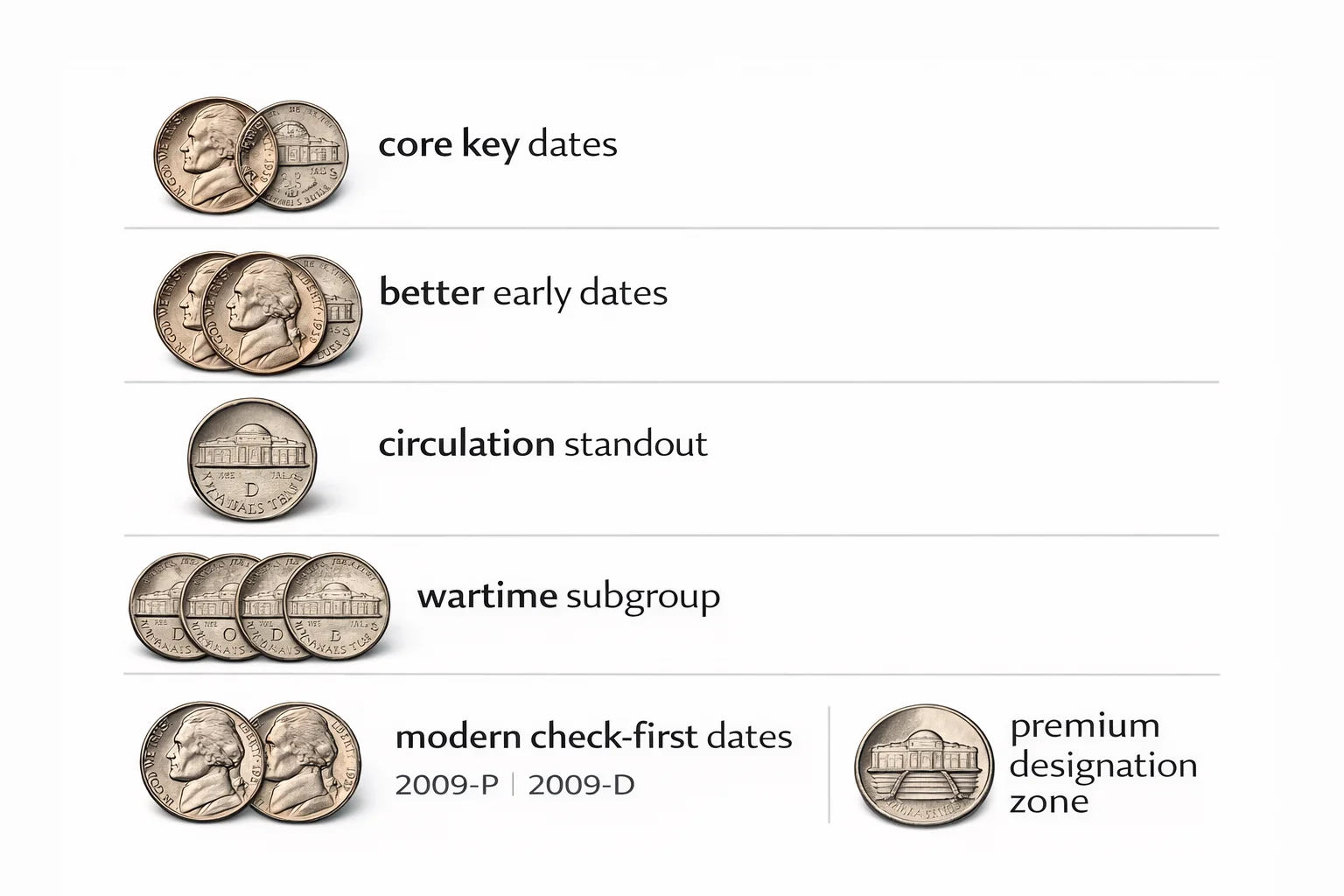
A useful chart works better when the dates are grouped by reason, not just by year. That keeps the reader from chasing the wrong coins for the wrong reason.
| Tier | What Goes Here |
| Core key dates | 1939-D, 1950-D |
| Better early dates | 1938-D, 1938-S, 1939-S |
| Circulation standout | 1942-D |
| Special subgroup | 1942 To 1945 Wartime Nickels |
| Modern check-first dates | 2009-P, 2009-D |
| Premium designation zone | Full steps coins |
This is the best way to read the Jefferson chart. It gives structure first. Price comes after that.
What to Check Before Looking at Price
Before using a chart, the collector should sort the coins by the right questions:
- Date and mint mark
- Wartime or regular alloy
- Reverse type if needed
- Full Steps potential
- Circulated or mint state
- Better date or common date
That order matters. A price chart is useful only after the coin is placed in the right bucket. Many Jefferson mistakes come from skipping that part and jumping straight to value.
Keeping the Better Dates Organised
Once the series branches into early better dates, wartime nickels, 1939 reverse types, and modern low-mintage pieces, simple tracking starts to matter. This is one place where the Coin ID Scanner helps as a practical collection-management tool. Keeping early dates, wartime pieces, and later low-mintage issues sorted in one place is often more useful than people expect when the chart starts to spread out.
That becomes even more helpful when the collection stops being a loose pile and starts becoming a planned set.
What the Chart Should Help You See
The best Jefferson nickel chart not only tells you which coin is expensive. It tells you why the coin gets checked first. Some dates are classic keys. Some belong to the silver wartime group. Some only matter when Full Steps enters the picture. Some modern dates stand out because mintages dropped sharply. Once that structure is clear, the chart becomes much easier to read.
That is the real goal. Not memorising a list. Understanding what the list is trying to show.
Final Take
The dates collectors check first in the Jefferson series are not important for one single reason. Some are famous keys. Some are better early dates. Some belong to the wartime silver subgroup. Some are modern low-mintage surprises. Some only become strong coins when Full Steps changes the equation. A good coin app should help you keep those categories straight before you start reading prices too loosely.